
 Deutsch
 Türkçe

Smile design is a personalized planning process in aesthetic dentistry that combines scientific data with an artistic approach by analyzing a person’s facial features, lip structure, skin tone, and character. The goal of this process is not only to create white and straight teeth but also to ensure gum aesthetics (pink aesthetics) and the functional harmony of the teeth, ultimately achieving a natural and healthy smile that is in full harmony with your face. Thanks to digital technologies, this approach allows the outcome to be predicted before starting the treatment and is implemented with modern materials such as porcelain laminates or zirconium.
What Is a Comprehensive Smile Design?
Smile design is the aesthetic and functional re-planning and restructuring of all elements that become visible when smiling. This approach goes far beyond the traditional concept of “tooth restoration,” which deals only with the color, shape, or position of individual teeth. Because even perfectly looking teeth cannot achieve the desired natural and attractive aesthetic outcome if they are not in harmony with the surrounding gums, lips, and overall facial structure.
Therefore, smile design sees the teeth as only one part of this bigger picture. The main goal is to achieve a smile that integrates with your face, one that is not only beautiful but also healthy and long-lasting. Reaching this holistic goal often requires teamwork that brings together different specialties. Orthodontics for the ideal positioning of the teeth, orthognathic surgery for skeletal mismatches in the jaw structure, periodontology for gum health and aesthetics, and restorative dentistry for the final touches can all work in coordination to achieve the best result.
What Are the Priorities in Smile Design?
All treatments in aesthetic dentistry are planned according to a hierarchy of principles that never change and build upon one another. This hierarchy is vital for the success and longevity of the treatment. Often referred to as the “Health, Function, Aesthetics” triad, it is like constructing a building from the foundation to the roof:
The first priority is always health. Starting an aesthetic treatment when there is an active cavity, advanced gum disease, or any infection in the mouth is like building a skyscraper on sand. The first step is to completely eliminate these issues and create a solid foundation.
The second priority is function. Once oral health is secured, it must be ensured that the teeth properly fulfill their basic roles such as chewing and speaking. The occlusion (bite relationship between teeth), the health of the jaw joint, and the balanced distribution of forces across all teeth are critical for aesthetic restorations to be used smoothly for years. For example, the position of the incisal edges of the front teeth not only determines the aesthetics of your smile but also ensures correct pronunciation of sounds such as “f” and “v” and serves as a guide for the movements of the lower jaw.
At the top of the pyramid lies aesthetics. Once a solid foundation of health and function is established, the stage of meeting aesthetic expectations begins. Although patients usually come to the clinic with aesthetic concerns, the ultimate goal of the dentist should always be to consider functional requirements. Because aesthetics largely reflect correct function. A successful smile design is not only one that looks beautiful at first glance but also distributes chewing forces evenly, enables natural speech, and delivers a durable result that stands the test of time.
How Is the Evaluation for an Aesthetic Smile Design Conducted?
A systematic smile analysis is carried out with an approach that progresses from a wide angle to detail, much like zooming in with a camera. This process allows the dentist to make a holistic evaluation without missing any detail. This approach is generally divided into two main categories.
- Macro Aesthetics: This is the big picture of the smile. It examines the overall harmony and balance between your facial structure, lips, gums, and teeth. It deals with whether the relationship between these elements is pleasing to the eye and how it is perceived as a whole. Factors such as facial symmetry, smile width, lip movements, and the amount of tooth visibility when smiling fall into this category.
- Micro Aesthetics: This focuses on a single tooth and its unique aesthetic characteristics. The color, form, fine textures on the surface, and optical properties such as light reflection and absorption of a tooth are analyzed in detail at this level.
The clinical workflow also strictly follows this hierarchy. The evaluation and planning process starts with a general analysis of your face (macro), then focuses on the relationship of your smile with your lips, and finally narrows down to the details of individual teeth (micro) and the selection of the most suitable material for these teeth. This systematic progression ensures that the created smile is not an isolated work but one that fully integrates with the person’s overall facial expression, guaranteeing a unique and personalized result.
Are There Artistic Rules That Make a Smile Aesthetic?
Yes, absolutely. The visual success of a smile design is based on fundamental art and composition principles that shape our perception of beauty. These principles regulate the relationship between the teeth and the face. Some basic artistic rules include:
- Central Dominance
- Symmetry (Static and Dynamic)
- Ratio and Proportion
Central dominance refers to the fact that the upper central incisors should be the aesthetic anchor of the smile. These teeth should be the most dominant and eye-catching elements of the smile, harmonizing with each other and having aesthetically correct proportions. Symmetry is considered in two ways. For the upper central incisors, perfect symmetry (static symmetry) like a mirror image is the goal. This is considered critical aesthetically. For lateral incisors and canines, however, dynamic symmetry is preferred. This means these teeth should closely resemble each other but not be identical. This state of “perfect imperfection” gives the smile a more lively, natural, and unique character, preventing an artificial look. Finally, ratio is fundamental for an aesthetic smile. For example, the most accepted ratio for a central incisor is that its width should be approximately 75–80% of its height.
Why Is Facial Analysis So Important in Smile Design?
Aesthetic evaluation begins with the analysis of the face as a whole, much like an artist preparing a canvas. Because the teeth are the most important elements to be placed on this canvas, they must be in harmony with it. During this analysis, some critical reference points and proportions are used:
- Interpupillary line (the horizontal line passing through the pupils)
- Facial midline (the vertical line dividing the face)
- Vertical thirds of the face
- Horizontal fifths of the face
In an ideal composition, the interpupillary line should be parallel to the horizon and thus to the occlusal plane of the teeth. The facial midline should be perpendicular to this horizontal line, and the dental midline should also be parallel to the facial midline. Facial proportions are based on classical aesthetic understanding. Vertically, the face is divided into three equal sections: from the hairline to the eyebrows, from the eyebrows to the base of the nose, and from the base of the nose to the tip of the chin. These basic proportions play a key role in determining the scope of smile design. They indicate whether restorative dentistry alone will suffice or if an underlying skeletal imbalance requires additional treatments such as orthodontics or jaw surgery.
How Should the Harmony Between Lips and Teeth Be in Smile Design?
This stage of analysis focuses on the relationship of the teeth with the lips, which frame them, both at rest and while smiling. Lip dynamics outline the boundaries of the smile design and determine how much of the teeth or gums will be visible.
The smile line, i.e., the amount of upper teeth visible when smiling, is one of the main factors determining aesthetics. The types of smile lines are:
- Low smile line
- Average smile line
- High smile line (Gummy Smile)
With a low smile line, less than 75% of the upper front teeth are visible when smiling. The average smile line is the most common and shows almost all of the upper teeth along with the tips of the gums (papillae). The high smile line, also known as “gummy smile,” is when the entire upper teeth and a noticeable band of gum are visible when smiling. If this is aesthetically uncomfortable, it can be easily corrected with pink aesthetic procedures.
Additionally, the smile arc, which is the curve formed by the incisal edges of the upper front teeth, is also important. For a youthful and attractive appearance, this curve should be parallel to the curve of the inner border of the lower lip. A flat or inverted smile arc can give a person an older look. Finally, the buccal corridor, the dark spaces visible between the corners of the mouth and the upper posterior teeth when smiling, should also be balanced to give the smile an aesthetically pleasing width.
What Is Examined in the Teeth Themselves for Smile Design?
This micro-aesthetic evaluation examines the character and features of the teeth both individually and as a whole. There are certain characteristics that teeth are expected to have in an ideal smile:
- Correct and vertical dental midline
- Ideal incisal edge position
- Aesthetic tooth proportions and inclinations
- Harmonious gingival zeniths
- Natural contact areas and embrasures between teeth
- Personalized characterization (Age, Gender, Personality)
The dental midline should align with the facial midline, and the position of the incisal edge should be correct both aesthetically and phonetically (for speech). In young individuals, 2–3 mm of the central incisors should be visible when the lips are at rest. The vertical inclinations of the teeth should gently tilt inward from the center to the sides, creating a natural appearance.
Details between the teeth are also important elements that add character to the smile. The size of the contact areas between adjacent teeth should decrease from the center to the sides according to the “60:40:30” rule. The small, V-shaped gaps (embrasures) between the incisal edges should increase from the center to the sides. These details prevent the teeth from appearing as a single block and artificial. Finally, subtle changes in tooth shapes can add age, gender, and even personality traits to the smile (SPA Factor). For example, rounder contours give a feminine look, while sharper and more defined contours create a masculine expression.
What Role Do Gums Play in Smile Design?
The gums are like a frame for the teeth, and therefore their health and architecture form the foundation of the final aesthetic success. This area, also known as “pink aesthetics,” is an inseparable part of smile design.
First and foremost, gum health is a non-negotiable prerequisite. Gums must be completely healthy before any aesthetic procedure. Healthy gums have some characteristics:
- Pale pink color
- Firm and tightly attached texture
- Slightly stippled (matte) surface, like an orange peel
- No bleeding during brushing
Once gum health is ensured, the harmony of the gum levels is evaluated. In an ideal “pink aesthetic,” the gum levels of the two central incisors should be aligned. The gum levels of the lateral incisors are usually 0.5–2.0 mm lower (closer to the incisal edge) than those of the central incisors. The gum levels of the canines return to align with those of the central incisors, creating an aesthetically pleasing “seagull wing” effect. Finally, the triangular-shaped gum tissue (papilla) that fills the space between the teeth is critical for aesthetics. Its absence can result in unaesthetic gaps known as “black triangles.”
How Is a Comprehensive Smile Design Carried Out from A to Z?
The smile design process is a carefully managed step-by-step journey that combines patient expectations with systematic diagnosis, meticulous planning, and precise clinical techniques. At the heart of this process lies the diagnostic mock-up (trial), which serves as both a communication tool and a clinical guide.
- Stage: Consultation and Data Collection: The process always begins with a consultation to listen to you and deeply understand your aesthetic goals, complaints, and expectations. This is a “co-design” process in which you are also a part of the design. Afterwards, high-resolution photos are taken, along with videos that capture your lip dynamics and speech during natural expressions. Finally, instead of traditional impression trays, digital measurements are taken with an intraoral scanner that creates three-dimensional digital models of your mouth.
- Stage: Diagnosis and Treatment Planning: All collected data are meticulously analyzed according to the principles of facial, lip, tooth, and gum aesthetics. In complex cases, treatment usually follows a certain sequence to establish a healthy and strong foundation. The treatment stages are typically as follows:
- Stage: Health (Treatment of all cavities and gum diseases)
- Stage: Structure and Position (If necessary, surgical procedures and orthodontic treatment)
- Stage: Aesthetics (Whitening, gum contouring, and final restorations)
The most exciting part of this stage is the mock-up. Your digitally planned new smile is first sculpted in wax on a model in the laboratory (wax-up). Then, using a silicone mold taken from this wax model, your new smile is “test-driven” in your mouth with a temporary material. This trial allows you to see the planned changes three-dimensionally on your own teeth, confirm whether your expectations match the dentist’s plan, and experience the final result before starting the treatment.
- Stage: Application of Restorative Procedures: Once the plan is approved, preparatory treatments begin. This may include professional teeth whitening to achieve a brighter base shade and laser gum contouring to create harmonious gum levels. Then comes the preparation of the teeth. The fundamental principle here is a minimally invasive approach. The approved mock-up (trial) is placed on the teeth, and preparation is carried out using this guide. This ensures that only the necessary areas are trimmed, preserving as much healthy tooth structure as possible. Finally, the definitive restorations, such as porcelain laminates or crowns, are cemented onto the teeth using precise bonding techniques.
- Stage: Maintenance and Long-Term Protection: Once treatment is completed, detailed maintenance instructions are provided to ensure the longevity of your new smile. This includes special brushing techniques, using non-abrasive toothpaste, and wearing a protective night guard for patients with habits like teeth grinding (bruxism). Remember, the long-term success of smile design directly depends on your adherence to these maintenance protocols.
What Materials Are Used in Smile Design?
The success of modern aesthetic dentistry is directly linked to the evolution of advanced dental materials that offer both aesthetics and durability. Choosing the right material is crucial for the longevity of the result.
- Ceramics: They are the cornerstone of highly aesthetic restorations due to their stability, biocompatibility, and ability to mimic natural tooth enamel.
- Feldspathic Porcelain: The most aesthetic type of ceramic. Layered by hand by a skilled technician, it uniquely replicates the fine color and translucency transitions of natural teeth. However, it is the most fragile type of ceramic.
- Glass Ceramics (e.g., Lithium Disilicate / e.max): A revolutionary material that perfectly combines high strength with superior aesthetics. It is an ideal option for crowns and laminates in both front and back teeth.
- Zirconia (Zirconium Dioxide): Known as “ceramic steel,” it is a high-performance ceramic with exceptional mechanical properties. It is incredibly resistant to fracture. It is especially preferred for patients who grind their teeth, long bridges, and masking discolored teeth. Thanks to the new-generation, more translucent versions, it can now also be used aesthetically in anterior regions.
- Composite Resins: The main material for aesthetic restorations performed in a single session. Over time, developments in filler particle technology have significantly increased their aesthetics and durability. Today’s nanofill composites offer high strength, excellent wear resistance, and superior polishability that can rival the appearance of ceramic restorations.
How Long Will My New Smile Last and How Should I Care for It?
The long-term success of a smile design is not determined only on the day the restorations are cemented. It is the sum of the quality of the material used, the precision of the clinical application, and most importantly, the patient’s maintenance habits.
Clinical Lifespan Expectations: Clinical studies show that porcelain laminates have a 10-year survival rate of approximately 95.5%. With good care, they can last 20 years or more. Composite restorations, however, have a shorter lifespan and typically require repair or replacement within 3 to 10 years due to wear, fracture, or staining. Crowns and bridges have an average lifespan of 5 to 15 years with good care but can last much longer.
Factors Affecting Longevity: Some factors can significantly shorten the lifespan of restorations.
- Teeth grinding or clenching (Bruxism)
- Habit of biting hard objects (pen, ice)
- Nail biting
- Poor oral hygiene
- Irregular dental check-ups
- Frequent consumption of acidic and sugary foods
- Not using the night guard regularly
Maintenance Protocols: To keep your new smile looking as good as the first day for years, you need to follow some basic maintenance rules.
- Use non-abrasive toothpaste
- Choose a soft-bristled toothbrush
- Use dental floss or interdental brushes daily
- Avoid alcohol-based mouthwashes (especially for composite restorations)
- Have professional dental cleaning and check-ups every 6 months
- Use your custom-made night guard every night
Additionally, your hygienist should also be careful during professional cleaning. Abrasive polishing pastes and some ultrasonic instruments can damage the surface of porcelain. Therefore, it is important to inform your clinic that you have aesthetic restorations.
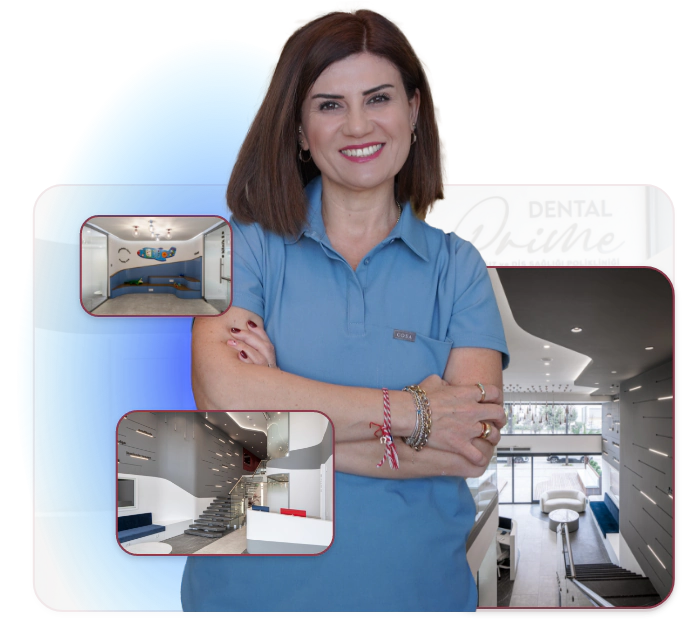
Pediatric Dentist Assoc. Prof. Dr. Sezin (Sezgin) Özer, who graduated from Samsun Bafra Anatolian High School and Hacettepe University Faculty of Dentistry, completed his PhD in Pedodontics at Ondokuz Mayıs University Faculty of Dentistry, Department of Pediatric Dentistry (Pedodontics). Between 2001 and 2018, he worked there as a research assistant, specialist, and faculty member. In April 2018, he left the university and started working in his own Pediatric Dental Clinic.