
 Deutsch
 Türkçe

Dental veneer prices are determined on a patient-specific basis according to a number of important factors such as the type of material used (porcelain laminate, E-max, zirconia), the number of teeth to be veneered, the complexity of the existing condition in the mouth, and the standards of the dentist and clinic providing the treatment. In aesthetic dentistry, every treatment plan—from a simple restoration to a comprehensive smile design—is different. Therefore, the cost of a veneer treatment is a personalized investment value that arises from the combination of these variables, and there is no standard sticker price.
How Does the Material Used Affect Veneer Prices?
The most fundamental starting point that determines the cost of a veneer treatment is undoubtedly the material from which the veneer is made. However, thinking of this cost merely as the purchase price of the material would be misleading. Factors such as how the material is processed, its aesthetic potential, how long it will last in the mouth, and what kind of maintenance expenses it may cause in the future outline the main contours of the total cost. Each material has its own cost story:
Cost Profile of Porcelain and E-max (Glass-Ceramic) Veneers
Advanced glass ceramics such as porcelain and E-max are almost the “haute couture” products of aesthetic dentistry. There are very logical and valid reasons underlying why their initial costs are higher than other options. These materials stand out with their superior aesthetics and naturalness. They refract and reflect light just like natural tooth enamel. Thus, it is almost impossible for the veneer to look artificial from the outside; they offer a lively and natural appearance like your own tooth. Their capacity to preserve their color for years is very high; they do not easily stain with external factors such as coffee, tea, and smoking.
One of the things that truly increases the value and cost of these materials is their longevity. Scientific data show that such restorations remain in the mouth without problems for periods exceeding 10–15 years. Although the initial investment is higher, the fact that they do not require constant repair or replacement can actually make them a more economical option in the long term.
However, what truly differentiates the cost of porcelain is the element that we can call the “artist’s cost.” The production of a porcelain veneer is an extremely delicate process that requires a technician to process ceramic powders layer by layer with brush strokes like a sculptor. This cannot be automated; it requires serious time, labor, experience, and artistic talent. Therefore, a significant portion of what you pay is not only for the material used but also a fee for the art and craftsmanship of the technician who brings that material to life.
Cost Profile of Zirconia Veneers
Zirconia is the counterpart of the words “strength” and “durability” in dentistry. Its extraordinary resistance to fracture makes it indispensable, especially for posterior teeth and in situations exposed to intense forces such as tooth grinding (bruxism). It is almost impossible for a zirconia substructure to fracture. This unshakable structure almost eliminates the likelihood of additional costs due to “fracture-related” issues in the long term.
However, the cost profile of zirconia is somewhat more complex. Zirconia itself is an opaque, i.e., non-light-transmitting, white material. This can make it difficult to achieve the lively and translucent look of natural teeth, especially in the front teeth. To overcome this aesthetic handicap, a more aesthetic porcelain layer is applied over the zirconia substructure. This is where the cost and risk are tied together. While the substructure is as strong as a tank, unfortunately the aesthetic porcelain layer on top is not as durable. Clinical observations show that the risk of the porcelain on zirconia veneers chipping off in small fragments is somewhat higher compared to traditional metal-supported veneers.
This creates a dual financial picture for the patient. With the initial investment, a very strong substructure is purchased, but there is also the possibility that, in the following years, an additional expense may be required to repair a fracture that may occur on the aesthetic surface. Therefore, this balance should be well understood when choosing zirconia.
Cost Profile of Composite Laminates (Aesthetic Filling)
Resin composites are generally known as a more budget-friendly alternative compared to porcelains. The main reason for this is that the production process is completely different. Composite laminates are applied by the “direct” method, that is, directly onto the tooth by the dentist, in the clinic, and generally in a single session. This completely eliminates an external laboratory process and the associated technician fees as in porcelain or zirconia.
While a significant portion of the fee you pay in a porcelain restoration goes to the laboratory, in a direct composite restoration almost the entire cost corresponds to the time the dentist allocates for that treatment, the materials used, and, most importantly, the artistic talent. The dentist places the composite material layer by layer on the tooth as if sculpting, giving the tooth a natural form, color, and anatomy, and then polishes it skillfully. Therefore, the success and aesthetics of composite restorations depend directly on the manual skill and experience of the dentist.
Although the initial costs are low, the picture may change when looking at the long term. Composites are less durable than porcelain; they are more prone to staining and wear over time. Their average lifespan is between 5 and 7 years. This may mean that over the lifespan of a porcelain veneer, you may need to renew a composite veneer two or three times, which can increase the total cost in the long term.
Why Does Your Personal Situation Change Veneer Prices?
If material selection forms the foundation of the cost, what truly shapes the final price of the treatment is the current condition in your mouth and how extensive an area the treatment will cover. Every patient is different, and every treatment plan is prepared individually. This naturally personalizes the costs.
Effect of the Number of Teeth to Be Treated on Price
This is the simplest and most understandable mathematical rule affecting the cost. In restorative dentistry, pricing is generally done “per tooth.” Therefore, there will be a significant cost difference between repairing a small fracture on only your front tooth with a single veneer and having an 8–10-tooth “smile design” that covers your entire smile line for aesthetic reasons. As the number of teeth included in the treatment increases, the amount of material to be used, the time spent on laboratory processes, and the time the dentist will allocate in the clinic also increase. This increase naturally reflects on the total treatment cost. You can think of it like the cost difference between painting a single room of a house and painting the entire house.
Effect of Case Difficulty and Complexity on Price
Each patient’s mouth has its own balance and challenges. The complexity of the case creates almost a “multiplier” effect on cost. The treatment of a patient with ideal occlusion, healthy gums, and only minor color and shape issues is simpler and more predictable. However, some situations make treatment much more complex in terms of both planning and implementation, thus increasing the cost. Some of these complexity factors that increase the price include:
- Deep bite malocclusions
- Crossbite problems
- Severe dental crowding
- Tooth clenching or grinding habit (Bruxism)
- Heavily discolored teeth (e.g., tetracycline staining)
- Severe gum recession
- Complex cases with missing teeth
In such situations, the dentist may need to carry out a much more detailed plan and perhaps seek support from different specialties (such as orthodontics or periodontology). The laboratory process also becomes more complicated to adapt to these challenges. This additional planning, expertise, and labor naturally reflect in the treatment fee.
Effect of Additional Treatments Required Before Veneers on Price
This is also one of the most important points that patients often overlook. The fee for a veneer or crown is generally only the visible part of the iceberg. The most fundamental rule of a successful and long-lasting aesthetic restoration is that the foundation on which it will be built—the teeth and gums—must be perfectly healthy. Even if you build the most beautiful building on a decayed foundation, that building will eventually collapse. Therefore, before starting veneer treatment, all underlying problems must be resolved completely, and each of these procedures is a separate item added to the total cost.
Among these basic preparatory treatments that may be encountered in addition to the veneer cost are the following:
- Filling treatments for decayed teeth
- Root canal treatment for infected or damaged teeth
- Treatment of existing gum disease (scaling and advanced periodontal treatments)
- Gum contouring (pink aesthetics) to improve smile aesthetics
- Post-core procedures if the supporting tissue of the tooth to be veneered is insufficient
This situation actually creates a layered cost structure for the aesthetic treatment. The “veneer cost” is the top and final layer of this structure. For many patients, the real fundamental cost is these preparatory treatments required to first bring oral health to an ideal and stable condition. Therefore, when discussing a treatment plan, it is most accurate to think in terms of the “total project cost,” which includes all the steps required to achieve a healthy and aesthetic result, rather than only the “per-tooth veneer price.”
How Do Laboratory and Technology Choices Determine Prices?
In “indirect” restorations like porcelain that are prepared outside the mouth in a laboratory, the production phase constitutes a very important part of the total cost. As important as the dentist’s clinical skill is, the skill of the laboratory and technician who bring that restoration to life is equally important.
Effect of Dental Laboratory Fees on Price
A significant portion of the fee the dentist collects from the patient for a porcelain laminate or a zirconia crown is paid to the collaborating dental laboratory. These laboratory fees are not standard and can vary greatly depending on many variables. The main factors affecting a laboratory’s pricing include:
- The brand and quality of the ceramic material used
- The experience, artistic talent, and reputation of the technician producing the restoration
- The economic conditions of the city where the laboratory is located
- The level of aesthetic difficulty and detail requirements of the case
- The type of production technology used (traditional or digital)
A master-level ceramist technician who has made a name in the field will naturally demand a higher fee than an ordinary technician. Likewise, a laboratory that works with the highest-quality and most aesthetic ceramic brands and has invested in advanced technology devices will also have higher costs. This means the dentist is choosing the quality of the “workshop” they collaborate with, and this quality is reflected in the final price.
Effect of Digital Technology (CAD/CAM) on Price
CAD/CAM (Computer-Aided Design/Manufacturing) technology has created a revolution in dentistry in recent years. In this system, a digital impression of the teeth is taken with intraoral cameras, the restoration is designed in a computer environment, and it is produced in special milling machines in the clinic or laboratory. This digital workflow offers great advantages such as comfort and speed for patients. Taking impressions with a camera is much more comfortable than traditional, gag-inducing impression trays. Sometimes it is even possible to finish and place a crown on the same day.
However, the impact of this technology on cost is often misunderstood. The fact that digital technology is faster does not always mean it is cheaper. For a clinic to set up these advanced technology systems (intraoral scanners, design software, milling machines) requires a very serious initial investment cost. The clinic must amortize this high investment over time and reflect it in its pricing policy. Scientific studies do not provide clear evidence that the digital workflow reduces the final cost for the patient.
Therefore, the price of a restoration produced with CAD/CAM may be similar to, or sometimes even higher than, that of a restoration produced with traditional methods. The value proposition here is not a lower price but a more comfortable, faster, and potentially more precise service experience. In other words, the patient pays not for a lower fee but for better technology and comfort.
How Do Dentist and Clinic Factors Affect the Final Price?
The final cost of a dental restoration is not limited only to the material used, the technology, and the condition in your mouth. The identity, vision, and structure of the dentist and clinic providing that treatment also play a decisive role in pricing.
Effect of the Dentist’s Expertise and Experience on Price
This is perhaps one of the most important factors. The experience, education, and reputation of the dentist performing the treatment directly affect the cost. Dentists who have received advanced specialty training in fields such as aesthetic dentistry and prosthodontics, who have completed countless cases, and who continually update themselves may charge higher fees that reflect their enhanced ability to successfully manage complex cases. A dentist with many years of experience and a strong reputation for producing predictable and successful results generally works at a higher fee. You can think of this like the fee paid to a specialist in any field. Patients are often willing to invest more for the assurance and peace of mind brought by expertise and high standards.
Effect of the Clinic’s Location and General Overheads on Price
The geographical location of a dental clinic has a direct impact on pricing. The general operating expenses—such as rent, staff salaries, and utilities—of a clinic operating in the most central and upscale district of a major metropolis will be much higher than those of a clinic located in a smaller city or a suburb. These high operational costs must inevitably be reflected in the fees of all treatments offered for the sustainability of the clinic. This is not unique to dentistry; it is a fundamental economic rule valid for all service sectors.
Effect of the Clinic’s Technological Investments and Service Quality on Price
The fee for a dental treatment is calculated not only to cover the costs specific to that treatment (such as material and laboratory) but also all the general overheads that keep the clinic running. These general expenses are the most important items reflecting the quality and vision of a clinic. The factors that affect a clinic’s general expenses and therefore its prices include:
- Clinic rent or property costs
- Salaries of all clinical and administrative staff
- Investment and maintenance costs of the latest technology devices (laser, tomography, CAD/CAM, etc.)
- High-quality consumables
- The cost of maintaining sterilization and hygiene standards
- Marketing and administrative expenses
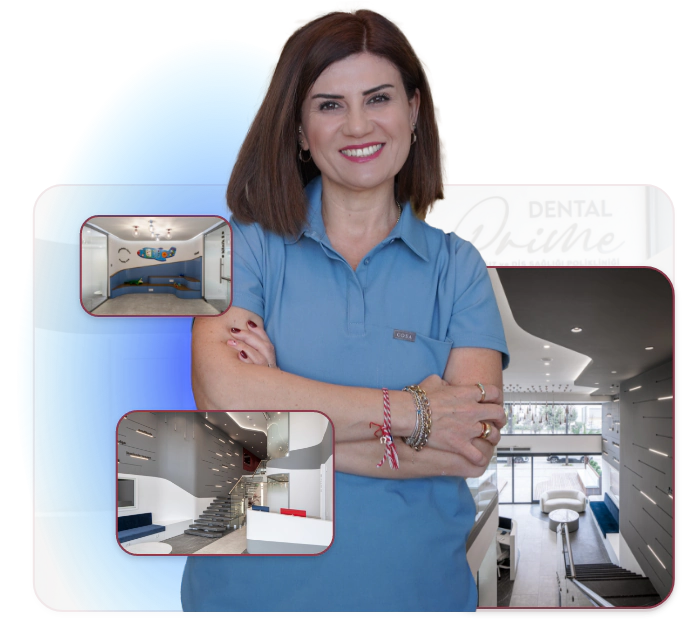
Pediatric Dentist Assoc. Prof. Dr. Sezin (Sezgin) Özer, who graduated from Samsun Bafra Anatolian High School and Hacettepe University Faculty of Dentistry, completed his PhD in Pedodontics at Ondokuz Mayıs University Faculty of Dentistry, Department of Pediatric Dentistry (Pedodontics). Between 2001 and 2018, he worked there as a research assistant, specialist, and faculty member. In April 2018, he left the university and started working in his own Pediatric Dental Clinic.