
 Deutsch
 Türkçe

Dental implant prices are determined entirely by personal factors such as the number of missing teeth the patient has, the condition of the jawbone, and overall oral health. The total treatment cost consists of the combination of the chosen implant brand, the type of prosthesis to be applied on top, and potential additional surgical interventions such as bone grafting. Due to these variables, implant treatment does not have a standard sticker price. This treatment plan, which is specially created for each patient, represents a personal investment in a long-lasting and healthy smile.
How does the number of implants you need determine the total implant price?
The most fundamental factor shaping the cost of implant treatment is how many teeth you are missing and how many implants are needed to replace them. Let’s think of it this way; for a single missing tooth, placing one implant and one porcelain crown on top is the simplest form of treatment. This forms the starting point of the cost.
As the number of missing teeth increases, the treatment plan naturally expands. For example, if you are missing three adjacent teeth, you may have several treatment options. The first is to place one implant for each gap, resulting in three separate implants and three crowns. The second is to place two implants at each end of the gap and apply a three-tooth bridge prosthesis on top. The way each scenario manages chewing forces, the techniques used, and therefore the costs differ from one another.
When it comes to a completely toothless jaw, the equation changes entirely. In this case, placing one implant for each missing tooth is not the approach. Thanks to modern treatment protocols such as “All-on-4” or “All-on-6,” only four or six strategically placed implants in the jaw can support a fixed prosthesis that covers the entire jaw. This approach offers a much different and more efficient cost profile compared to using 8-10 implants for the same purpose.
Here we must emphasize an important point: as the treatment expands, the cost increase is not linear. In other words, the cost of ten implants is not ten times the cost of one implant. Just like bulk shopping being more economical per unit compared to retail, in full jaw treatments, the cost per tooth generally decreases. This is because in such large restorations, the main factor determining cost is not the number of implants but the engineering of the prosthesis, the technological infrastructure, and the complexity of the surgical planning.
Why does the region where the implant is placed have such an impact on implant prices?
Not every area of our mouth provides the same surgical conditions. The location where the implant is placed directly affects the difficulty of the procedure, the materials to be used, and the precision required, which in turn plays an important role in cost. We can examine these regions under two main headings.
Aesthetic Region (Front Teeth): This area, usually the front teeth in the upper jaw that are visible when we smile, is where treatment is most delicate. The goal here is to make the implant and the tooth on top indistinguishable from the neighboring natural teeth. Achieving this aesthetic perfection requires much more detail and skill than a standard implant application. Some of the factors that make implant treatment in the front region more delicate and costly include:
- Ensuring gum aesthetics
- Bone and soft tissue management
- Precise three-dimensional implant positioning
- Use of custom abutments
- High light-transmitting porcelains
Even the slightest angulation error or a millimetric asymmetry in the gums in this area can affect the entire smile. Therefore, treatments in this area require more time, special materials, and expertise, which reflects on the cost.
Functional Region (Back Teeth): In the back regions where our molars are located, the priority is function and durability, followed by aesthetics. This region is where the strongest chewing forces occur. Therefore, larger and stronger implants that can withstand these loads must be selected. Additionally, this region has different anatomical challenges. In the upper jaw, the proximity to the maxillary sinus cavity, and in the lower jaw, the distance to the main nerve canal, require surgery to be performed more carefully and precisely. Sometimes additional surgical procedures (such as sinus lifting) may be necessary to overcome these anatomical obstacles, which is another factor affecting cost.
How does your current oral health change the price of implant treatment?
To build a solid building, you need a strong foundation. The situation is exactly the same for implant treatment; a healthy oral environment where the implant will be placed is an absolute requirement for the treatment to last long-term. If there are problems in your mouth that need to be solved before starting the treatment, these are planned as separate treatment steps and have their own costs. These are not optional extras but mandatory preparatory steps to protect your investment.
Some common oral health problems that need to be solved before starting implant treatment include:
- Advanced gum disease (periodontitis)
- Untreated cavities
- Teeth requiring root canal treatment
- Root tip infections (apical lesions)
- Impacted wisdom teeth
For example, if you have active gum disease, the high bacterial level and inflamed tissues in the mouth can prevent the implant from integrating with the bone and significantly increase the risk of infection (peri-implantitis). Therefore, gum treatment must be done before implant surgery to bring oral health to an ideal state. Scaling, root planing, or more advanced surgical gum treatments are preliminary treatments that secure the future of your implant investment and must be considered in the total cost planning.
Why do implant prices increase in cases of bone deficiency and what is bone graft?
The success of an implant depends on the process called “osseointegration,” where the implant biologically integrates with the jawbone, essentially becoming a part of the bone. For this process to occur properly, there must be sufficient volume and quality of bone surrounding the implant in all directions. However, due to tooth extraction, trauma, or long-term tooth loss, the jawbone may gradually resorb. In such cases, there is no solid foundation left to place the implant.
This is where bone grafting, commonly known as adding “bone powder,” comes into play. This procedure is done to strengthen the deficient bone area and create the ideal volume for the implant. This additional surgical procedure increases the total treatment cost both due to the cost of the material used and the procedure itself.
The main sources of bone grafts that can be chosen depending on the clinical situation include:
- Autogenous Grafts (Patient’s Own Bone)
- Allografts (From Tissue Bank)
- Xenografts (Animal-Derived)
- Alloplasts (Synthetic Materials)
Each of these materials differs in origin, processing technology, and biological bone-forming potential. For example, autogenous grafts taken from the patient’s own jaw or hip are considered the “gold standard,” but since they require a second surgical site, they are more complex and costly. Other options eliminate this need but present different biological properties and cost structures. Your doctor will select the most suitable graft material for your situation to balance both biological success and cost-effectiveness.
Why does sinus lifting affect implant prices in the upper jaw?
In the back regions of our upper jaw, adjacent to the roots of our molars, there are anatomical air cavities called the “maxillary sinuses.” When teeth in the back region are extracted, two negative conditions occur simultaneously: first, the bone area left toothless gradually resorbs downward; second, the sinus cavities, influenced by gravity, sag downward and expand. Together, these two situations eliminate the vertical bone height required for placing an implant.
To solve this issue, a surgical procedure called sinus lifting (sinus augmentation) is performed. In this procedure, the membrane lining the base of the sinus (Schneiderian membrane) is carefully lifted upward, and bone graft material is placed into the created space. This creates a new bone volume where the implant can be safely placed.
Sinus lifting is a delicate procedure requiring expertise and is an additional cost item in implant treatment. Some factors affecting the cost of a sinus lifting operation include:
- Amount of bone graft used
- Condition of the sinus membrane (thickness, health)
- Surgical technique used (open or closed)
- Anatomical variations inside the sinus (septa)
- Whether the implant can be placed in the same session
For example, in cases requiring only a few millimeters of bone gain, the closed technique is less invasive and less costly, whereas in cases with severe bone loss, the open technique is more complex and therefore more expensive.
How do procedures such as tooth extraction and socket preservation affect the overall implant price?
Sometimes, in the area planned for an implant, there may be a tooth or root that can no longer be saved. Extracting this tooth is the first step of preparation for implant treatment and is itself a surgical procedure. Depending on the difficulty of the extraction (simple or surgical), this procedure will also have a cost.
However, a more important issue after tooth extraction is socket preservation (ridge preservation). When a tooth is extracted, the surrounding bone is left empty, and while the body quickly tries to fill this space, significant resorption and collapse of the bone occurs. If no precautions are taken after extraction, within a few months the bone volume in the area may become insufficient for implant placement. This could make a larger and more costly bone grafting surgery mandatory in the future.
Socket preservation, on the other hand, is a proactive investment made to prevent this situation. As soon as the tooth is extracted, bone graft material is placed into the empty socket, and it is covered with a membrane. Although this procedure adds an extra cost at the time of extraction, it preserves bone volume and can save you from a much more expensive and complex surgery in the future. In short, a small investment today can prevent a big expense tomorrow.
How does the material difference between titanium and zirconium implants change implant prices?
The implant itself, the screw part placed into the jawbone, is generally made from two main materials. The choice of material is an important decision that directly affects both the aesthetics and the cost of the treatment.
- Titanium Implants: Titanium has been considered the “gold standard” of dental implantology for decades. Its excellent compatibility with the body (biocompatibility) and its seamless integration with the bone (osseointegration) have been proven by countless scientific studies. Since the production technologies are highly developed and optimized, titanium implants are generally kept at a more affordable cost level. Its outstanding durability and flexibility against high chewing forces in the back regions make it a reliable and evidence-based choice for most cases.
- Zirconium Implants: Also known as “ceramic implants,” zirconium implants have gained popularity as a metal-free alternative. Their biggest advantage is aesthetic superiority. Their natural tooth-like white color eliminates the risk of titanium’s gray hue reflecting through the gums, especially in patients with thin gum tissue or in the front region. This aesthetic advantage makes zirconium particularly attractive for restorations in the smile line. However, processing zirconium and converting it into an implant is a much more complex and high-tech process compared to titanium. This manufacturing difficulty, combined with research and development costs, raises zirconium implant prices significantly above those of titanium implants.
How do prosthesis options on top of implants affect the total implant price?
The implant is essentially only the root part of the artificial tooth. Another important component of the treatment cost is the prosthesis placed on top, which is what we see as the “tooth” from the outside. Since these prostheses are produced from different materials and with different technologies, they create an important variable in the total cost.
First, between the implant and the porcelain crown is a connection part called an abutment. These parts can be standard (prefabricated) or custom-made. Standard abutments are more economical, while custom abutments are designed with CAD/CAM technology to precisely fit your gum shape. Especially in the front region, achieving a natural and aesthetic appearance where the gum blends with the crown makes custom abutments critically important, and this affects the cost.
The main types of materials used in crowns (caps) placed on implants include:
- Porcelain-Fused-to-Metal Crowns (PFM)
- All-Ceramic Crowns (E-max)
- Zirconia-Supported Porcelain Crowns
- Monolithic Zirconia Crowns
Porcelain-fused-to-metal crowns have long been a durable and economical option. However, due to their metal substructure, their light transmittance is lower, and over time, they may cause a gray reflection at the gum line. Zirconia and all-ceramic crowns, on the other hand, do not contain metal, so they offer aesthetics and light transmittance very close to natural teeth. This superior aesthetics and biocompatibility make them ideal especially for front teeth, but their production technologies and material costs are higher. In addition, the quality of the dental laboratory producing these prostheses, the technician’s experience, and the digital technologies used are important factors that determine the quality of the final product and thus the cost.
Does the use of tomography (3D imaging) increase the cost of implant treatment?
In the past, implant planning was carried out using two-dimensional films such as panoramic X-rays. However, these films only showed the height and width of the bone, not its thickness. Today, Cone Beam Computed Tomography (CBCT), a three-dimensional imaging technology, has become a standard in implant surgery.
Tomography may seem like an extra cost compared to a standard X-ray, but it should be considered not as an expense but as an “insurance” for the safety and success of your treatment. Some critical advantages provided by tomography include:
- Millimetric measurement of bone volume
- Identification of sensitive structures such as nerves and sinuses
- Determination of the ideal implant position
- Minimization of surgical risks
- Early detection of the need for additional surgical procedures
Thanks to tomography, the surgeon can place the implant in the correct angle and depth in a virtual environment before surgery and can clearly see how far it is from anatomical structures such as nerves or sinuses that must not be damaged. This detailed planning eliminates unexpected surprises that may occur during surgery. Preventing serious and costly complications such as nerve injury or sinus perforation is an invaluable advantage that more than compensates for the initial cost of tomography. In short, tomography is an indispensable investment that maximizes the predictability and safety of treatment.
Why does guided implant surgery change implant prices compared to the traditional method?
The implant placement procedure can be performed in two basic ways: the traditional (freehand) method and guided surgery (digital method). The technological difference between these two approaches is directly reflected in the treatment cost.
Traditional Method: In this method, the surgeon places the implant into the jawbone using their own skills, experience, and tactile sense, based on tomography and clinical examination findings. This method does not require additional technological equipment, so its initial cost is lower. However, the success of the operation depends entirely on the surgeon’s experience and precision.
Guided Surgery: In this method, technology takes the precision of the human hand to the next level. The tomography (3D) scan taken from the patient is transferred to a special software. The surgeon plans the ideal implant position, angle, and depth millimetrically on this software. Then, a surgical guide that exactly matches this virtual plan is produced with 3D printers. During surgery, this guide is fitted onto the patient’s jaw, and the implant is placed into the planned position through the slots on the guide. This method reduces the margin of error to nearly zero.
The steps that make up the cost in the guided surgery process include:
- Detailed three-dimensional planning software
- Production of a custom surgical guide
- Use of advanced technology
These additional steps increase the initial cost of guided surgery compared to the traditional method. However, this technology offers invaluable advantages, especially in cases where multiple implants are to be placed or where bone is critical. It provides a more precise, safer, and often shorter operation. Since it ensures that the implant is placed in the most ideal prosthetic position, it improves both aesthetic and functional success in the long term.
Do the expertise of the dentist and the location of the clinic affect implant prices?
The final layer determining the cost of your treatment relates to the dentist and the clinic providing the service. Just as every lawyer or engineer has different areas of expertise and experience, the same applies in dentistry.
Implant surgery can be performed by a general dentist, but it can also be carried out by an Oral and Maxillofacial Surgeon or a Periodontist (Gum Disease Specialist) who has received specialized training in this field. Specialist dentists undergo an intensive residency training lasting 4-6 years after dental school. During this training period, they gain extensive experience in much more complex cases, advanced surgical techniques (such as block bone grafting, nerve repositioning), and the management of all possible complications during surgery. Therefore, especially in difficult and risky cases, the knowledge and experience of a specialist is critical for the success of the treatment. This advanced expertise and experience naturally reflect in the cost of the service.
In addition, the geographical location of the clinic also affects prices. The operating costs (rent, staff salaries, taxes, etc.) of a clinic located in the center of a major metropolis are not the same as those of a clinic in a smaller city. These differences in operating costs inevitably reflect on the prices of the services offered.
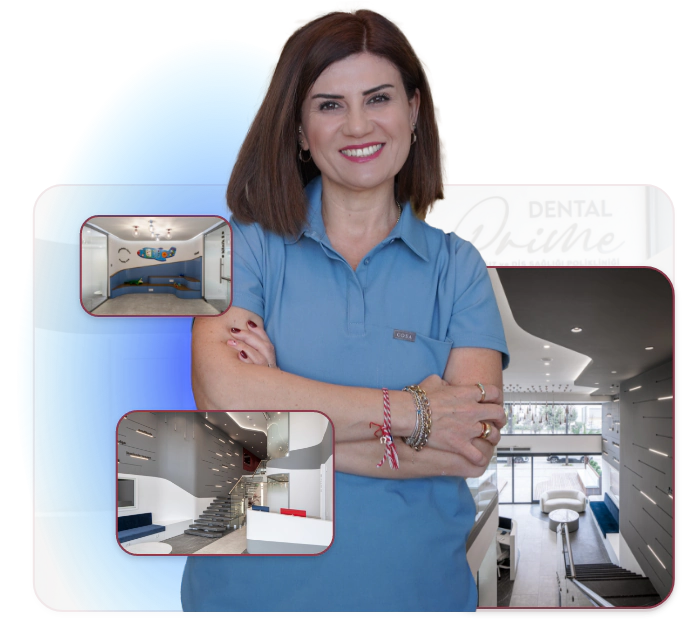
Pediatric Dentist Assoc. Prof. Dr. Sezin (Sezgin) Özer, who graduated from Samsun Bafra Anatolian High School and Hacettepe University Faculty of Dentistry, completed his PhD in Pedodontics at Ondokuz Mayıs University Faculty of Dentistry, Department of Pediatric Dentistry (Pedodontics). Between 2001 and 2018, he worked there as a research assistant, specialist, and faculty member. In April 2018, he left the university and started working in his own Pediatric Dental Clinic.