
 Deutsch
 Türkçe

Full-mouth implant prices consist of the sum of the surgical procedures performed, the selected prosthetic materials, and the necessary additional treatments, as a reflection of the treatment plan prepared specifically for the individual. This cost is shaped by fundamental elements such as the number of implants to be placed in the jawbone, the material quality of the permanent teeth to be made on top, the preparatory procedures required before treatment such as bone augmentation, and the scope of the technique applied. Therefore, the total investment for a complete implant dental treatment becomes clear as a result of a detailed clinical examination and planning carried out according to the patient’s current oral health status and aesthetic expectations.
Why does the number of implants to be placed change the prices?
One of the most fundamental factors determining the cost of treatment is the number of implants to be placed in the jaw. This can be likened to the number of columns in the foundation of a building; the weaker the ground, the more support is needed. As the number of implants increases, the materials used and the scope of the surgical procedure naturally expand. Two main approaches stand out on this topic.
In the All-on-4 approach, an entire arch prosthesis is fixed with only four implants. There are several reasons why this method is advantageous in terms of cost:
- Using fewer implants
- Generally not requiring additional bone augmentation
- A shorter surgical procedure time
- A faster healing process
These features make All-on-4 an attractive option for those seeking a more controlled initial cost.
In the approach known as All-on-6 or All-on-X, six or more implants are placed in the jaw. This method is preferred especially in cases where bone density is poor or the jaw structure requires more support. The initial cost is higher than All-on-4 because it requires more implants and more complex surgery. However, this should be considered as a kind of “risk management.” More implants provide a more balanced distribution of chewing forces, thereby reducing the risk of mechanical problems (such as screw loosening, prosthesis fracture) that may occur in the long term. Therefore, the higher initial cost can offer a more economical solution in the long run by preventing new and unplanned expenses that may arise later. This choice requires evaluating not only the initial costs but also the total value and risks the treatment will bring over a lifetime.
What are the cost differences between fixed and removable prostheses?
The type of prosthesis to be made on the implants is one of the most important distinctions determining the cost, and each has its own financial profile:
Implant-Supported Removable Prostheses (Overdentures) are structures that can be inserted and removed by the patient but sit firmly on the jaw thanks to implants. Compared to conventional dentures, they offer far superior comfort and retention. The basic elements that determine the cost structure of this option are:
- Requiring fewer implants (usually 2 or 4)
- A simpler and faster prosthesis production process
- A lower initial investment cost
However, these prostheses have a long-term maintenance cost. The rubber or plastic attachments that connect the prosthesis to the implant wear over time and need to be replaced regularly (usually annually). This creates a predictable and ongoing additional cost item for the patient.
Implant-Supported Fixed Bridges are screwed to the implants by the dentist and cannot be removed by the patient. They offer aesthetics and function closest to natural teeth. Chewing efficiency and patient satisfaction are at the highest level. The cost structure of this option is different:
- Requiring a greater number of implants (usually 4, 6, or more)
- A more complex substructure and production process of the prosthesis
- Materials used are generally more high-end
- The highest initial investment cost
The economic rationale of this option is its long lifespan and the fact that regular maintenance costs such as replacement of worn parts are much lower. In other words, the high initial cost is an investment made for less expense and more comfort in the long term.
Does placing teeth immediately after implants are inserted affect the cost?
The decision of when the prosthesis will be inserted after the surgical procedure is another important factor affecting both the treatment process and the cost. In the immediate loading protocol, a temporary fixed prosthesis is inserted on the day the implants are placed or within a few days. In this way, the patient leaves the clinic with teeth and does not experience a toothless period. This approach is possible especially if bone quality is very good and the implants can be placed into the bone with very high primary stability. Immediate loading can reduce some costs because it shortens the treatment process and, in some cases, eliminates the need for a second surgery.
However, this approach also carries certain risks. If patient selection is not ideal or if a problem occurs during the healing process, the risk of the implant not integrating with the bone (implant failure) may increase. Treating a failed implant disrupts the entire initial plan and means much greater new expenses that require starting over.
On the other hand, in the conventional method called delayed loading, after the implants are placed, 3 to 6 months are allowed for complete osseointegration. During this period, the patient usually uses a temporary removable prosthesis. This waiting period extends the total duration of treatment and may add a temporary prosthesis cost. However, especially in risky situations where the bone structure is weak, it maximizes the success rate of the treatment. It offers a safer and more predictable financial path by minimizing the risk of a major cost such as implant loss.
Why do one-stage and two-stage surgeries have different costs?
Implant surgery can be planned as single-stage or two-stage according to needs, and this affects the cost.
Single-Stage Surgery, as the name suggests, is the method in which the implant and the healing abutment that will remain exposed through the gum are placed in a single session. When healing is complete, there is no need for a second surgical procedure to proceed to prosthesis fabrication. Situations in which this approach is preferred include:
- Cases where bone quality is good
- Situations where the initial stability of the implant in the bone is very strong
- When no additional bone grafting is performed
Since this method involves a single operation, it is more efficient in terms of surgical fees, material use, and clinician time, and therefore less costly.
Two-Stage Surgery is an approach in which, after the implant is placed in the bone, it is completely covered with gum tissue and left to heal “buried.” A few months later, with a small second surgical procedure, the implant is uncovered and a healing abutment is placed. The cost of this method is higher because it requires a second surgical procedure. However, in some cases, this additional cost is a wise investment made to guarantee the success of the treatment.
- When bone grafting is performed at the same time as implant placement
- When the initial stability of the implant in the bone is weak
- In situations where the risk of infection is high
This method ensures that the implant integrates with the bone without problems, preventing a much greater financial loss such as early implant failure.
How does it affect prices if the implant is titanium or zirconia?
The type of material from which the implant is made directly determines the basic material cost of the treatment. Two main materials stand out in the market.
Titanium implants are considered the “gold standard” of implantology, with success proven by decades of scientific research. They have earned this title thanks to their excellent compatibility with the body and seamless integration with the bone. Due to their widespread use and established manufacturing technologies, they are the most cost-effective implant material, and their prices form a reference point for other materials.
Zirconia implants are a high-strength, metal-free ceramic alternative. They are preferred especially in situations where aesthetics are very important. The main reasons why zirconia has a higher cost are:
- Not causing a gray shine-through in thin gums thanks to its white, tooth-colored structure
- Being an ideal solution for patients with metal allergies
- The raw material cost being higher than titanium
- Manufacturing and processing being more complex and sensitive
Therefore, choosing zirconia implants is a premium preference that requires accepting the additional financial investment brought by aesthetic and biological advantages.
What material options are there for the superstructure (prosthesis) and why do prices differ?
The material of the final prosthesis is one of the elements with the greatest impact on the total cost. When making this choice, it is very important to consider the difference between a product’s “initial purchase price” and its “lifetime cost of ownership.” An option that appears more affordable at the beginning may become more expensive in the long run by requiring frequent repairs or replacement. The main materials used in prosthesis fabrication and directly affecting the cost are:
- Acrylic Hybrid Prostheses
- Metal-Ceramic (PFM) Prostheses
- Monolithic Zirconia Prostheses
Acrylic Hybrid Prostheses are the most economical starting point for fixed full-arch restorations. They are relatively light and are easier and cheaper to repair than others. However, this low initial cost is offset by the material’s lack of durability in the long term. Acrylic material is prone to wear, discoloration, and fracture over time. The fact that they often require major maintenance or complete replacement within 5 to 10 years is an important factor that increases lifetime cost.
Metal-Ceramic (PFM) Prostheses are positioned cost-wise between acrylic and zirconia. They are more expensive than acrylic hybrids due to the cost of the metal alloy and the intensive, skill-requiring labor needed for porcelain application. Although they offer good durability, their biggest risk is the veneering porcelain chipping or fracturing over time. Such repairs are often difficult and may require removing the prosthesis.
Monolithic Zirconia Prostheses are generally the premium option with the highest initial cost. Since they are digitally produced from a single solid zirconia block, they are extraordinarily resistant to fracture and wear. The economic rationale behind this high cost is that, thanks to their superior durability, the need for mechanical maintenance and repairs is minimal in the long term. In other words, the high initial investment is a move to largely eliminate future repair or replacement expenses.
What is the reason for price differences between implant brands?
As in the automotive or electronics sectors, there are brands in different price segments in the dental implant market as well. The basis of these price differences is not only the material itself but also the scientific background and assurance behind the brand.
Premium implant brands generally have a higher cost. This price difference is justified by massive investments in R&D, scientific studies spanning decades that support the brand, precise engineering and manufacturing tolerances, and patented surface technologies developed to accelerate osseointegration. Using these systems is actually an investment in the predictability and reliability of the treatment and in the low risk of complications that would require costly revision procedures such as component fracture or screw loosening in the long term.
Budget-focused implant brands, on the other hand, make treatment more accessible to a wider audience by offering a lower initial cost. There may often not be as comprehensive long-term scientific data behind these systems as there is for premium brands. Although they function successfully, choosing these systems requires balancing a lower initial cost against a potentially higher risk of complications in the future (which is not guaranteed). This shows that the cost of an implant is not only the purchase price but also the value of the research and quality assurance behind it.
What is the impact of pre-treatment preparations on the cost?
The most fundamental reason costs vary so much from one patient to another is the preparatory and ancillary procedures that must be performed before starting treatment. Just as land must be cleared and prepared for the foundation before building a house, implants must also be placed on a healthy foundation.
The standard approach for an accurate diagnosis is now three-dimensional tomography (CBCT). This is the surgeon’s roadmap before surgery. It shows the amount of bone, the location of nerves, and other important anatomical structures in millimetric detail. Although taking a CBCT adds an additional diagnostic cost compared to a standard X-ray, it reduces to almost zero the risk of complications during surgery—such as nerve injury—that would require much greater repair costs. This is a small investment made for safety.
Other procedures that may need to be done before starting treatment and that affect the cost include:
- Tooth Extractions: Teeth in the mouth that cannot be saved need to be removed. The number of teeth to be extracted and the difficulty of extraction (simple or surgical) determine the cost.
- Bone Grafting (Adding Bone Powder): Performed to strengthen the jawbone that has resorbed due to long-term toothlessness. This procedure adds a separate surgical fee and material cost.
- Sinus Lift (Sinus Augmentation): A special bone augmentation surgery performed when there is insufficient bone for implants in the posterior upper jaw and constitutes a significant additional cost.
- Gum Treatment: Implants must be placed in healthy gums. Treating existing gum diseases is a mandatory preparatory stage added to the cost of implant treatment.
These procedures can constitute a significant and variable part of the total investment of the treatment.
Do clinic- and dentist-related factors change prices?
The final cost of treatment is also influenced by the characteristics of the clinic and the dentist providing the care. The expertise of the dentist performing the treatment is an important factor. Clinicians with advanced training in their field, such as oral surgeons or prosthodontists, have more experience in managing complex cases and minimizing the risk of complications. This expertise is often reflected in the fee structure and is, in a sense, an investment in the success of the treatment.
In addition, advanced technologies used in the clinic can also affect the cost.
- Computer-Guided Surgery
- Digital Impression and Design (CAD/CAM)
- Three-Dimensional Imaging (CBCT)
These technologies require significant investment for the clinic. However, by increasing surgical precision, shortening treatment time, and reducing the margin of error, they can provide savings for both the clinician and the patient in the long term.
Finally, the geographical location of the city where the treatment is performed also affects prices. Since clinics in large metropolises have higher general operating expenses such as rent and staff salaries, this is naturally reflected in treatment fees.
How should the lifetime cost of implant treatment be calculated?
When evaluating full-mouth implant treatment, focusing only on the initial investment cost is seeing only half the picture. What really matters is the “total cost of ownership” of the treatment. While the implants themselves can serve for a lifetime with good care, the prosthetic structure on top will require maintenance and repair over time.
Potential additional costs that may be encountered in the long term vary according to the type of prosthesis.
- Replacing inserts in removable prostheses
- Tooth repair or replacement in acrylic prostheses
- Fracture repair in porcelain prostheses
- Regular professional maintenance for all prostheses
For example, an acrylic prosthesis, which is the most economical option initially, may need to be completely renewed within 5–10 years, and this means a significant future financial expense. In contrast, a monolithic zirconia prosthesis, which is the most expensive option initially, may incur almost no mechanical maintenance cost thanks to its exceptional durability. Therefore, prudent financial planning should also take these long-term maintenance needs into account.
Is implant treatment more economical in the long term compared to conventional dentures?
At first glance, it is easy to answer this question with “no,” because the initial cost of full-mouth implants is much higher than that of conventional dentures. However, when we evaluate the cost over a period of 15–20 years, the picture changes completely.
Conventional dentures have hidden costs:
- Periodic relining procedures to adapt to ongoing bone resorption
- The need to completely replace the prosthesis every 5–7 years
- The ongoing expense of denture adhesives used daily
When these recurring expenses accumulate over the years, they can easily exceed the total cost of the one-time investment made in a permanent implant-supported solution. In addition, one of the most important benefits of implants is that they stimulate the jawbone and prevent its resorption. This not only preserves facial aesthetics but also prevents more complex and costly bone grafting surgeries that may arise in the future. From this perspective, implant treatment can be a more economical solution in the long term both financially and biologically.
Can the impact of treatment on quality of life be evaluated financially?
The true value of implant treatment cannot be measured by numbers alone. The most important return of this treatment is the priceless increase in quality of life that it creates. Being able to eat whatever you want comfortably, not worrying that your prosthesis will move while laughing or speaking in public, and regaining lost self-confidence are benefits that have no monetary equivalent.
For many patients suffering from a deteriorating dentition, full-mouth implant rehabilitation actually represents a final and definitive treatment. It offers the opportunity to end an endless and unpredictable cycle consisting of repeated root canal treatments, crowns, extractions, and partial dentures—each with its own cost. Although the initial investment is significant, it offers the potential to solve all existing dental problems at once and to establish a stable, healthy, and sustainable oral environment for decades. This promise of “certainty and predictability” has immense financial and psychological value for patients who are tired of constantly dealing with dental problems.
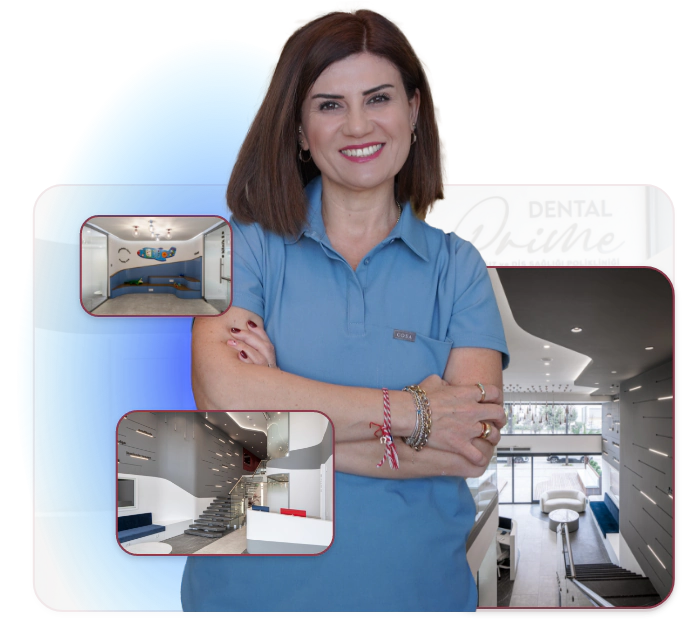
Pediatric Dentist Assoc. Prof. Dr. Sezin (Sezgin) Özer, who graduated from Samsun Bafra Anatolian High School and Hacettepe University Faculty of Dentistry, completed his PhD in Pedodontics at Ondokuz Mayıs University Faculty of Dentistry, Department of Pediatric Dentistry (Pedodontics). Between 2001 and 2018, he worked there as a research assistant, specialist, and faculty member. In April 2018, he left the university and started working in his own Pediatric Dental Clinic.