
 Deutsch
 Türkçe

Smile design prices are determined according to the content and scope of the treatment plan that is completely personalized. The basic factors that make up this cost are the number of teeth on which aesthetic restoration will be applied, the type and quality of materials to be selected such as porcelain laminate or composite resin, and the necessity of additional procedures such as teeth whitening or gum aesthetics. Since each patient’s current oral health and aesthetic goals are different, the cost emerges as an investment plan shaped according to these personal needs. This process reflects the value of a holistic health and aesthetic improvement journey rather than the price of a single procedure.
What Are Smile Design Prices Based On?
The most fundamental factor shaping the cost of smile design is how comprehensive and detailed the treatment plan specially created for you is. It is like the difference between a tailor adjusting a standard jacket to fit you and sewing a suit from scratch just for you. Although both are “clothes,” the effort, materials, and craftsmanship involved are completely different.
The main elements that directly affect the cost of smile design are:
- The number of teeth to be included in the treatment
- Basic health treatments required before starting aesthetic procedures
- The overall level of complexity of the treatment plan
Now let’s take a closer look at what these items mean in practice. The number of teeth to be treated is the simplest multiplier of the cost. There will naturally be a large cost difference between correcting a small shape deformity in only your two front teeth and a complete aesthetic renewal that covers all upper and lower teeth visible when you smile. Each tooth included in the plan represents the clinical time to be spent on it, the valuable materials to be used, and the meticulous working time to be spent in the laboratory. Therefore, the more teeth involved in the process, the greater the investment.
The second and perhaps most critical item is basic health treatments. You cannot build a beautiful building without a solid foundation. Likewise, a permanent and aesthetic smile cannot be built on an unhealthy mouth. Therefore, solving all problems in the mouth before starting aesthetic procedures is a necessity. This is not just an additional cost but an insurance for the entire aesthetic investment to be made. For example, if you have bleeding or inflammation in your gums, this condition must be treated first. Applying a porcelain laminate to a tooth with untreated gum disease may lead to gum recession, discoloration, and ultimately the laminate falling off after a short time. This means that the entire investment is wasted and a much more costly repair process begins. Similarly, procedures such as cleaning caries in the teeth and renewing leaking old fillings are also basic steps that must be completed before moving on to the aesthetic process.
Finally, the complexity of the plan directly affects the cost. A plan that includes only teeth whitening and small composite touches on a few teeth is relatively simple and predictable. However, the treatment of someone who has worn down their teeth due to excessive clenching over the years, whose occlusion has deteriorated, and who may have lost several teeth is called a “full mouth rehabilitation.” This is a much more complex, long-term, and comprehensive treatment plan. In such cases, the collaboration of multiple specialists is often required. While the aesthetic dentist manages the process, support may be obtained from an orthodontist to move the teeth to the correct position and from a periodontist (gum specialist) to place implants to replace missing teeth or to optimize gum levels. The involvement of each of these specialists in the process increases the complexity of the treatment and therefore the total budget, but it ensures that the result is flawless and permanent both aesthetically and functionally.
How Does Material Selection Change Smile Design Prices?
The type and quality of the materials to be used in the treatment is one of the most important variables determining the smile design budget. This choice directly affects not only the initial figure but also the appearance of your smile over the years, its durability, and its maintenance needs. Think of it like choosing between a more economical laminate covering and natural marble or granite when having a kitchen countertop made. Both serve a function, but their durability, susceptibility to staining, and aesthetic appearance are very different. This difference naturally affects the price as well.
The main restorative materials frequently used in smile design and affecting the cost are:
- Porcelain (Ceramic)
- Composite Resin
- Zirconia and Lithium Disilicate
Understanding the differences between these materials will help you grasp the logic behind the cost. The two materials most frequently compared in smile design are porcelain laminates and composite laminates. Porcelain laminates require a higher initial investment. This is because these laminates are produced in a laboratory environment by a master dental technician, specially for each tooth, with the meticulousness of a sculptor. High-quality porcelain is extremely resistant to staining (such as from tea, coffee, and smoking) and preserves its color for years. Its greatest advantage is that it reflects light like natural tooth enamel, which gives it an incredibly lively and natural appearance. With good care, they can be used without problems for 15–20 years or longer.
Composite laminates (also known as bonding) are generally a more budget-friendly alternative and are often completed in a single session by being applied directly onto the tooth by the dentist. This is a less invasive method. However, this low initial cost comes with a price. Composite material is not as durable as porcelain and is more prone to staining over time. Its average lifespan is around 5–7 years, and it may need to be renewed or repaired at the end of this period.
At this point, the “long-term cost of ownership” comes into play. Even if you pay more initially for porcelain, over the lifespan of a porcelain laminate you may need to renew a composite laminate two or three times. When all these renewal costs are added up, there is a possibility that porcelain becomes a more economical option in the long run. Therefore, material selection is not so much an immediate budget decision as it is a long-term investment decision.
The same principle applies to crowns (caps) that cover the entire tooth. New-generation, high-tech ceramics such as zirconia or lithium disilicate offer incredible durability against chewing forces and, since they contain no metal, provide excellent aesthetics. They are more costly than old-type metal-supported porcelains because their production processes are more complex and technology-intensive. However, the aesthetics and biological compatibility they offer justify this difference.
Which Treatments Affect the Cost of Smile Design?
Smile design is like different puzzle pieces coming together to form a complete picture. Each piece, that is, each treatment, has its own impact on the total cost. Some treatments are small touches and have little effect on the budget, while others are more comprehensive and make up the main items of the cost.
Some common procedures that may be included in the treatment plan and affect the cost are:
- Teeth Whitening (Bleaching)
- Cosmetic Bonding (Composite Laminate)
- Porcelain Laminates and Crowns
- Gum Aesthetics (Pink Aesthetics)
- Orthodontic Treatment (Clear Aligners)
- Dental Implants
Teeth whitening is often one of the first steps in smile design, and its cost varies depending on the method chosen. In-office whitening performed under the control of a dentist and activated with special light sources is more costly because it provides fast and dramatic results in a single session. At-home whitening, which you apply yourself with trays prepared specifically for you, is spread over a longer process and is a more economical option.
Cosmetic bonding is used to correct small fractures, gaps, or shape deformities in teeth. Its cost depends on how large an area the procedure covers. There is a difference in both time and material usage between repairing a tiny chip at the edge of a single tooth and covering the entire front surface of a tooth with composite (composite laminate), and this is reflected in the price.
Porcelain laminates and crowns are generally the most important financial items of smile design. Here, the main factors determining the cost are how many teeth will be treated and, as we explained in detail in the previous section, which quality of ceramic material is selected.
Gum aesthetics or pink aesthetics is necessary especially for people whose gums are very visible when they smile (“gummy smile”) or whose gum levels are asymmetric. It is the process of reshaping the gums with lasers or traditional methods. Although the use of lasers speeds up the healing process and increases comfort, it may change the price slightly compared to the traditional method due to the device’s investment cost.
If there is crowding of the teeth, orthodontic treatment may be required before aesthetic restorations. Clear aligners, which are frequently preferred today for aesthetic reasons, are priced according to the complexity and duration of the treatment. There will be a budget difference between a short correction of a few months and a comprehensive treatment that lasts more than a year.
Finally, if there are missing teeth, dental implants come into play to complete the smile. Implant treatment is a multi-stage process that includes the surgical procedure, the implant itself, the abutment placed on it, and finally the porcelain crown, and its cost consists of the sum of these components.
Do Digital Technologies Raise Smile Design Prices?
The digital technologies used in modern dentistry have virtually revolutionized the smile design process. So, are these advanced technologies a luxury that increases the cost, or are they actually a wise investment that provides savings in the long run? The answer is definitely the latter. Think of these technologies like the detailed 3D model and virtual tour that an architect prepares before starting a construction project. You pay a fee for this planning at the beginning, but this fee saves you from the much greater cost of tearing down and rebuilding a wall that was built incorrectly later on.
There are key digital tools in the smile design process that affect the cost structure and increase value:
- Digital Smile Design (DSD)
- Intraoral Digital Scanners
- CAD/CAM (Computer-Aided Design and Manufacturing)
Digital Smile Design (DSD) is a protocol that allows you to see the result before starting treatment. Through high-resolution photos and videos, your new smile is designed with special software to be compatible with your face, lips, and character. This is not just a “preview.” This is a planning session in which you are also involved in the process, clarify your expectations, and speak the same language as the dentist. Although allocating time to this planning phase and the software used has a cost, its biggest benefit is eliminating “surprises.” It reduces to zero the risk of saying “this is not what I envisioned” when the treatment is finished. This protects you from potential dissatisfaction and the emotional and financial burden of starting everything over again.
Intraoral digital scanners have replaced those old, nausea-inducing, putty-like impression materials. By scanning the inside of your mouth with a device that has a small camera at the tip, a three-dimensional digital model of your teeth is created with micron-level precision. This technology has an investment cost for the clinic, but the precision it provides is priceless. Even tiny errors that may occur with traditional impressions can cause the porcelain produced in the laboratory not to fit the tooth properly. This means long adjustments in the clinic or, at worst, having to redo the work entirely. Digital scanning almost completely eliminates this margin of error, saving both time and potential additional costs.
CAD/CAM technology is where this digital model transforms into a tangible restoration. The digitally designed porcelain laminate or crown is produced flawlessly by being milled from a single ceramic block by a computer-controlled precision device. This eliminates possible human errors in manual craftsmanship and provides perfect fit and durability. The laboratory’s investment in this high technology is naturally reflected in the laboratory fee. In return, however, long-lasting, trouble-free, and perfectly fitting restorations are obtained. As a result, the fee paid for digital technologies is actually an investment in predictability, precision, and most importantly, the guarantee of “getting it right the first time.”
Why Does the Level of Expertise Affect the Smile Design Budget?
When discussing the cost of smile design, materials and technologies usually come to the fore, but the most important and most valuable element is often overlooked: the human factor. That is, the knowledge, skills, experience, and artistic vision of the dentist performing the treatment and the dental technician preparing the restorations. This is the most critical component that cannot be measured concretely but directly determines the quality of the result.
There are two main pillars of the human factor that affect the budget:
- The dentist’s expertise and experience
- The mastery of the dental technician and the laboratory
The dentist’s expertise constitutes a significant part of the fee you pay. Let’s make an analogy: Anyone can find a recipe on the internet, but there is a world of difference between a dish prepared by a master chef and one made by a novice. The chef not only follows the recipe; they choose the best ingredients, know the nuances of cooking techniques, and most importantly, add their own artistic touch to the presentation. Aesthetic dentistry is similar. A dentist who has developed themselves in their field, participated in numerous trainings and seminars, and has an advanced aesthetic vision not only performs a technically correct job but also ensures that the smile they create integrates with your face, character, and even your expressions. This “artist’s eye,” which can see a one-shade difference in the color of the tooth, a millimetric detail in its shape, and the way it reflects light, elevates the result from ordinary to excellent. Therefore, the fee paid for a dentist’s experience and expertise is actually an investment in this refined aesthetic understanding and foresight.
The second critical element is the mastery of the dental technician. Your porcelain laminates or crowns are prepared not by the dentist but by a dental technician in the laboratory in line with the dentist’s directives. These technicians are the unseen heroes of your smile. “Master” technicians who work especially with high-level aesthetic cases are virtually artists. They process the porcelain layer by layer to mimic the depth, translucency, and vitality of a natural tooth. A high-level aesthetic dentist always works with boutique laboratories that operate at their standards, use the best materials, and whose artistic talent they trust, so as not to risk their own reputation and the patient’s outcome. The fees of these laboratories are higher than those of standard laboratories that perform mass production because hours of labor and craftsmanship are devoted to each tooth.
This situation creates a “quality chain” between the dentist and the laboratory. When you trust an experienced and visionary dentist, you are indirectly investing in the network of master technicians they have carefully selected and worked with over the years. In other words, the fee you pay covers not only the dentist’s effort at the chairside but also the collective skill and artistry of the entire expert team working behind the scenes to achieve that perfect result.
Does the Clinic’s Location Affect Smile Design Prices?
Yes, the city and even the district where a dental clinic is located can have an indirect effect on smile design prices. This is not a situation unique to dentistry and is an economic principle valid for all areas in the service sector.
The main reason for the cost difference is the clinic’s operating expenses (overhead costs). The monthly rent paid by a clinic operating in a central location in Istanbul or in an upscale district in Ankara will not be the same as the rent expense of a clinic located in a smaller city or an outlying neighborhood. Similarly, staff salaries, taxes, and other general operating costs in big cities are generally higher.
In addition, clinics that aim to offer their patients the most modern and comfortable environment make significant investments in interior design, the latest technological devices, and the comfort of patient waiting areas. Every device, chair, and even the sterilization unit they use has an investment and maintenance cost. All these operating expenses must naturally be reflected in the fees of the services offered for the clinic to be sustainable. Therefore, it is normal to see price differences between clinics in different geographical locations or with different concepts. However, this does not mean that a place is better just because it is expensive. What matters is the quality of the service, technology, dentist expertise, and ultimately the result you receive in return for the fee you pay.
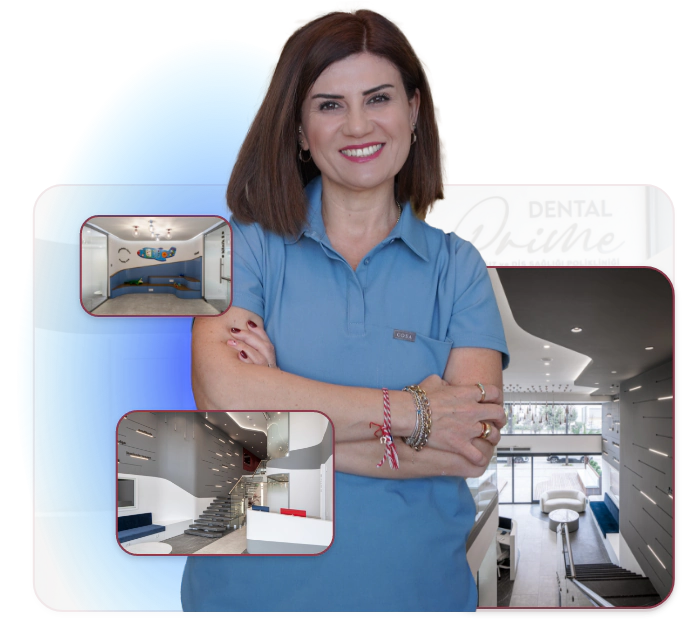
Pediatric Dentist Assoc. Prof. Dr. Sezin (Sezgin) Özer, who graduated from Samsun Bafra Anatolian High School and Hacettepe University Faculty of Dentistry, completed his PhD in Pedodontics at Ondokuz Mayıs University Faculty of Dentistry, Department of Pediatric Dentistry (Pedodontics). Between 2001 and 2018, he worked there as a research assistant, specialist, and faculty member. In April 2018, he left the university and started working in his own Pediatric Dental Clinic.