
 Deutsch
 Türkçe

Gum treatment is a set of professional procedures applied to eliminate diseases such as gingivitis and periodontitis, which manifest with symptoms like gum bleeding, gum recession, sensitivity, and bad breath. This treatment process ends the inflammation by cleaning the bacterial plaque and tartar, which are the main sources of infection. Thanks to innovative methods such as laser gum treatment, the aim is to repair advanced damage such as bone loss and restore the health of the tissues supporting the tooth. The ultimate goal is to achieve a functionally and aesthetically healthy oral structure that lasts.
What Are the Causes of Gum Disease?
The main culprit behind gum disease is dental plaque, an extremely organized community of bacteria. Plaque is a colorless, sticky film that adheres to the surfaces of your teeth, particularly along the delicate border where the tooth meets the gum. You can compare it to the slimy layer that forms inside a glass that hasn’t been washed for some time. This bacterial community feasts whenever you consume sugary or carbohydrate-rich foods. They metabolize these foods for their life cycle and, as a byproduct, release acids and toxins that harm your gums. Your body’s first reaction to this chemical attack is inflammation. As your gums attempt to fight these foreign invaders, they become red, swollen, and sensitive.
If this bacterial plaque is not removed daily with proper brushing and flossing, the process moves to the next stage. Minerals naturally present in your saliva, such as calcium and phosphate, precipitate into this soft plaque layer and harden it. This hardened, calcified form of plaque is known as tartar or calculus. Tartar itself does not directly cause inflammation; the real issue lies in its extremely rough and porous surface. This surface serves as a perfect refuge for new and more aggressive bacterial plaques to adhere and multiply. Once tartar has formed, it sticks to the tooth surface like concrete and cannot be removed by brushing or flossing. At this stage, professional intervention is required to clean these hardened deposits and eliminate the primary source of inflammation.
What Is Gingivitis, the Simplest Form of Gum Disease?
Gingivitis literally means gum inflammation and is the first, mildest, and most important stage of periodontal disease. At this stage, the inflammatory reaction caused by bacterial plaque is limited only to the gums. The most critical and hopeful point is this: at this stage, the inflammation has not yet reached the fibers that connect the teeth to the jawbone (periodontal ligament) or the bone tissue surrounding the tooth (alveolar bone). This means no permanent damage has yet occurred to the tooth’s supporting system.
Although gingivitis often progresses silently, it gives very clear signs that a careful eye can notice. Not ignoring these signs is the most important step to prevent much bigger problems in the future. The most common symptoms of gingivitis include:
- Redness
- Swelling
- Bleeding when brushing or flossing
- Sensitivity
- Bad breath
The most fundamental and remarkable feature of gingivitis is that it is completely reversible. Since no destruction has yet begun in the supporting tissues, inflammation can be completely eliminated with the right intervention. By performing a professional cleaning to remove all plaque and tartar, followed by the patient maintaining this cleanliness with an effective daily oral care routine, the gums can return to their previous healthy, firm, and pale pink state without any permanent trace. Therefore, gingivitis should be seen as a warning signal from your body.
What Is Periodontitis, the Advanced Gum Disease?
If the warning signal of gingivitis is ignored and not treated, the inflammatory process continues, and the disease progresses to the next, much more destructive stage: periodontitis. This transition marks the evolution from a reversible inflammation to a disease where the supporting tissues of the teeth (bone and fibers) are irreversibly destroyed. This critical shift begins when bacterial plaque moves below the gum line, into the depths of the normally shallow groove (sulcus) between the tooth and gum.
The fundamental mechanism of periodontitis is based on a disproportionate battle between bacteria and the body’s immune system. The toxins released by aggressive bacteria under the gums keep the immune system on constant alert. In this state of alarm, the body’s defense cells release powerful enzymes, such as collagenase, to fight the infection. However, these enzymes cannot distinguish friend from foe and, while attacking bacteria, also destroy the collagen fibers that anchor the teeth to the bone and the bone tissue itself. In other words, much of the destruction is caused by the body’s own defense mechanism, which, though well-intentioned, spirals out of control.
The most concrete result of this tissue destruction is the formation of periodontal pockets. As the supporting tissues deteriorate, the gum separates from the tooth root, and the healthy gum sulcus, normally 1–3 mm deep, becomes a pathologically deepened pocket. These deepened pockets provide a perfect, sheltered environment for more dangerous bacteria that thrive in oxygen-free conditions. Unfortunately, toothbrushes or floss cannot reach the bottom of these pockets for cleaning. This creates a self-perpetuating vicious cycle: the pocket produces bacteria, bacteria cause more bone loss, which deepens the pocket and harbors even more bacteria. The main differences between gingivitis and periodontitis are as follows:
- Gingivitis only affects the gums, while periodontitis also affects the bone.
- Gingivitis is reversible, but bone loss caused by periodontitis is permanent.
- In gingivitis, no pocket formation occurs; in periodontitis, pocket formation is the main sign.
- Teeth do not become loose in gingivitis, while in advanced periodontitis, teeth may loosen and shift.
Does Gum Disease Affect Other Parts of the Body?
Yes, it absolutely does. We now know that periodontitis is not just a problem confined to the mouth. All systems in our body are interconnected, and oral health is an inseparable part of this whole. The inner surface of a periodontal pocket is almost like an open wound due to inflammation. This ulcerated surface acts as a gateway for millions of bacteria and their toxic byproducts to easily enter the bloodstream.
The spread of bacteria and inflammatory molecules through the blood can trigger inflammatory reactions in other parts of the body or worsen the course of existing chronic diseases. Scientific studies have revealed strong links between periodontitis and many serious systemic health problems. This makes gum treatment not only about saving teeth but also a crucial part of protecting overall health. Some scientifically documented associations include:
- Heart and vascular diseases
- Stroke
- Poorly controlled diabetes
- Respiratory diseases (such as pneumonia)
- Rheumatoid arthritis
- Adverse pregnancy outcomes (such as preterm birth or low birth weight)
- Certain types of cancer
How Is the Correct Diagnosis of Gum Disease Made?
The first step to successful treatment is undoubtedly a correct and complete diagnosis. This involves much more than simply looking into your mouth with a mirror—it is a systematic process of data collection. The goal is to clearly determine the current condition: whether your gums are healthy, in the reversible stage of gingivitis, or in one of the irreversible stages of periodontitis. The entire treatment protocol will be shaped according to this initial diagnosis.
The diagnostic process begins with a detailed consultation. We collect information about your overall health, medications you are taking (such as blood pressure, blood thinners, or diabetes medication), habits like smoking, and previous treatments. Conditions such as diabetes or smoking are significant risk factors for gum disease and directly affect the treatment plan. After this discussion, an oral examination is performed. Visual findings such as the color of your gums, whether there is swelling, and whether the surface looks shiny or stippled are noted. In addition, the amount and location of existing plaque and tartar buildup are evaluated. These initial steps provide important clues as to the nature of the problem.
How Is Gum Disease Detected with Periodontal Probing?
After the visual examination, we proceed to periodontal probing, the most fundamental and important tool in diagnosing gum disease. This procedure provides us with objective and measurable data about your gum health. We use a special instrument called a periodontal probe, which is very thin, blunt-tipped, and marked with millimeter lines. We gently insert this tool into the natural space between your tooth and gum, known as the sulcus. In a healthy individual, this space hugs the tooth tightly, much like a sleeve fits snugly around your wrist.
The probe is advanced until it lightly touches the attachment tissue at the base of this space, and we read how deep it has gone by the markings on the probe. This measurement is repeated at six different points around each tooth (three on the outer side, three on the inner side). These measurements give us the pocket depth in millimeters. In healthy gums, this depth is usually between 1 and 3 mm. If bleeding occurs during probing, it is the clearest sign of active inflammation (gingivitis) in that area. If depths of 4 mm or more are recorded, this suggests that the gum has started to detach from the tooth at the base, indicating a transition toward periodontitis. Depths of 5–6 mm show that the disease has progressed and that it is impossible for you to clean these pocket depths with a toothbrush or floss. Depths of 7 mm or more indicate advanced periodontitis and usually mean that bone loss is also significant. This simple yet highly effective measurement allows us to map the disease and target treatment precisely to the affected areas.
Why Are X-Rays Important in the Diagnosis of Gum Disease?
While periodontal probing provides critical information about soft tissues and pocket depths, it is not sufficient to see the whole picture. The hidden part of the iceberg—what is happening in the bone tissue beneath the gums—can only be observed with dental X-rays. X-rays are an inseparable and essential part of periodontal diagnosis.
X-rays clearly reveal the amount, shape, and extent of bone loss caused by periodontitis. For example, if we measure a deep pocket during probing, the X-ray confirms whether the depth is truly due to bone loss. They also show the type of bone loss. Has the bone eroded around all the teeth in a horizontal line (horizontal bone loss), or is there a crater-like vertical defect near a specific tooth (vertical bone loss)? This distinction is vital for treatment planning. Vertical bone loss defects are often better candidates for regenerative treatments (such as bone grafting), whereas horizontal bone loss is typically managed with surgical procedures that reshape the bone. A comprehensive assessment usually requires a full-mouth series of periapical and bitewing X-rays or a panoramic radiograph.
What Is the Basis of Non-Surgical Gum Treatment?
The first stage of periodontitis treatment almost always involves non-surgical methods. The primary goal of this phase is to control inflammation and halt disease progression by removing bacterial plaque and tartar, the main causes of the disease. The “gold standard” of this fundamental treatment is Scaling and Root Planing (SRP). Commonly known as curettage, this is far more comprehensive and thorough than routine dental cleaning.
SRP consists of two interrelated steps. The first step is Scaling, which involves the meticulous removal of all plaque and hardened tartar deposits on both the visible crown parts of the teeth and, more importantly, the root surfaces within the periodontal pockets under the gums. Special ultrasonic instruments and precise hand instruments (curettes) are used for this. The second and more critical step is Root Planing. After tartar is removed, the root surface is polished with these hand instruments to eliminate bacterial toxins and the rough layer of cementum. The goal is to leave the root surface as smooth, hard, and clean as glass. Bacteria have difficulty adhering to smooth surfaces. A root surface that is smooth and free of toxins provides a biologically compatible environment for healing gums to reattach firmly to the tooth. Since this procedure is performed under the gums, it is always done under local anesthesia for patient comfort and is typically completed over several sessions divided across the mouth.
Is Antibiotic Support Necessary in Non-Surgical Gum Treatment?
In most cases, a meticulously performed SRP treatment may be sufficient on its own. However, in some stubborn, aggressive, or very advanced cases of periodontitis, mechanical cleaning alone may not be enough to fully control the infection. In such cases, adjunctive antimicrobial therapies may be used to enhance the effectiveness of SRP.
These adjunctive therapies fall into two main categories. The first is Local Antimicrobial Therapy. In this approach, the antibiotic or antiseptic agent is applied directly into the periodontal pocket where the infection exists, without affecting the whole body. This ensures the drug works at maximum concentration precisely where it is needed. Some commonly used local agents include:
- Slow-release chips containing chlorhexidine
- Antibiotic microspheres containing minocycline (Arestin®)
- Antibiotic gels containing doxycycline
The second approach is Systemic Antibiotic Therapy. This involves taking antibiotics orally in pill form and is usually considered alongside SRP for very severe, widespread infections or aggressive forms of periodontitis. However, due to its effect on the entire body and the increased risk of antibiotic resistance, it is used cautiously and only in selected cases. Another approach that has gained popularity in recent years is Host Modulation Therapy. In this method, a low-dose antibiotic (such as low-dose doxycycline) is prescribed at levels insufficient to kill bacteria. The aim here is not to fight bacteria directly but to suppress the body’s own excessive inflammatory response and enzyme activity that cause tissue and bone destruction. This provides an important contribution to treatment without creating a risk of antibiotic resistance.
When and Why Is Gum Surgery Necessary?
After non-surgical initial treatment (SRP) is completed, we reassess your gums’ healing response after some time (usually 4–6 weeks). In many cases, we observe a significant reduction in pocket depths, bleeding stops, and overall improvement occurs. However, sometimes—especially when the disease was very advanced at the start—certain areas may still have deep pockets (usually 5 mm or more).
These deep pockets pose two major problems. First, it is impossible for you to effectively clean such depths with brushing or flossing. Second, it may not always be possible for us to thoroughly clean these deep root surfaces blindly (without visibility) with our instruments. At this point—when non-surgical treatment alone is insufficient and stubborn deep pockets remain—periodontal surgery (gum surgery) becomes necessary. The main purpose of surgery is to temporarily lift the gum tissue to gain direct visibility of the root surfaces and underlying bone tissue. This enables us to see and remove all remaining tartar and diseased tissue and repair bone damage if present.
How Are Gum Pockets Treated with Flap Surgery?
Flap surgery, also known as pocket reduction surgery, is the most commonly used surgical method in the treatment of advanced periodontitis. Its purpose is to eliminate deep pockets and create shallow, healthy gum structures that both you and we can easily clean. This procedure generally involves the following steps:
- Anesthesia and Flap Elevation: The area is completely numbed with local anesthesia. Precise incisions are then made in the gum tissue, and the gum is gently lifted like a flap, exposing the tooth roots and bone surface.
- Deep Cleaning: With direct visibility, even the smallest remnants of tartar and plaque on the root surfaces are meticulously cleaned. In addition, inflamed and diseased soft tissue within the pocket is completely removed.
- Bone Reshaping: Periodontitis often creates rough, irregular craters and protrusions in the bone surface. These irregularities provide ideal sites for bacterial reaccumulation. At this stage, the surgeon reshapes the bone with special instruments to create a smooth, physiologic contour.
- Flap Closure and Suturing: Once all cleaning and reshaping are completed, the lifted gum flap is repositioned tightly against the newly contoured bone and root surfaces and secured with very fine stitches. This effectively reduces pocket depth.
What Are the Treatment Methods for Gum Recession?
Gum recession is a common problem that not only makes teeth look longer than they are but also increases sensitivity and the risk of cavities by exposing root surfaces. To treat this condition and regenerate lost gum tissue, soft tissue grafting—also known as gum grafting—procedures are applied. The goal of these procedures is to transplant a piece of gum tissue from another site to the area of recession. Depending on the source of the tissue used, different techniques are available:
- Connective Tissue Graft: The most commonly used and most successful method. A thin piece of connective tissue is usually taken from beneath the epithelial surface of the patient’s own palate and stitched to the recession site.
- Free Gingival Graft: In this technique, tissue is again taken from the palate, but this time both the surface epithelium and underlying connective tissue are removed together. It is generally preferred to increase the amount of protective, keratinized gum around the tooth rather than covering root surfaces.
- Allograft (Donor Tissue): An alternative that does not require harvesting tissue from the patient’s palate. Medically processed, sterilized, human donor tissue from a tissue bank is used. This tissue acts as a scaffold for the patient’s own cells, encouraging new gum formation.
Is It Possible to Regain Bone Lost Due to Periodontitis?
Yes, this is one of the most exciting areas of modern periodontal therapy. While traditional surgery generally aims to stop disease progression by reshaping and sacrificing some tissue, regenerative procedures are based on a completely different philosophy: rather than cutting away, they aim to rebuild what was lost. The goal of these procedures is to reconstruct the tooth’s supporting structures lost due to periodontitis—new bone, new periodontal ligament (fibers), and new cementum. This is a biological approach to repair the tooth’s original support system, almost like turning back time. However, these advanced techniques are not suitable for every case and yield the best results when the bone loss has a specific morphology (such as vertical, crater-shaped defects).
How Is Gum Treatment Performed with Bone Grafting?
Bone grafting, commonly known as “bone powder application,” is the cornerstone of regenerative treatments. In this procedure, special grafting materials are placed into the area where bone has eroded to stimulate new bone formation. These materials act as a scaffold for the body’s own bone cells to migrate and multiply (osteoconduction). Some grafts also actively stimulate bone formation with biological signals (osteoinduction). This procedure is usually performed during flap surgery, once the bone defect has been directly exposed. Bone grafts can be obtained from different sources:
- Autograft: Bone taken from another area of the patient’s body (such as the chin).
- Allograft: Processed human donor bone obtained from a tissue bank.
- Xenograft: Processed animal bone, usually bovine, with its mineral structure preserved.
- Alloplast: Synthetically produced, biocompatible materials based on calcium phosphate.
How Does Guided Tissue Regeneration Work in Gum Treatment?
Guided Tissue Regeneration (GTR) takes bone grafting a step further and is based on a very clever biological principle. Different types of tissues in our body heal at different rates. In a wound, gum and epithelial cells are the fastest to multiply. If a bone defect is left untreated, these fast-moving soft tissue cells fill the space before the slower-growing bone cells can, resulting in repair tissue rather than true bone regeneration.
GTR intervenes in this process. After the bone graft is placed into the defect, a biocompatible barrier membrane is positioned over it. This membrane acts like a tent, physically blocking the fast-growing gum cells from entering the bone defect. This protected space gives slower, but more valuable, bone and periodontal ligament stem cells the time and opportunity to migrate into the area and form new bone, cementum, and fibers. The membrane either dissolves over time on its own or is removed with a second minor procedure.
Is Painless Gum Treatment with Laser Really Possible?
Yes, thanks to today’s technology, this is largely possible. Laser technology has introduced a treatment option in periodontology that reduces the need for scalpels and sutures, making procedures more comfortable and minimally invasive (causing the least harm to tissue). “Laser treatment” is a general term; the real importance lies in which type of laser, with what wavelength, and under which patented protocol is used. One of the most well-known, scientifically proven, and FDA-approved protocols in this area is the LANAP® (Laser Assisted New Attachment Procedure) protocol.
LANAP aims to eliminate the frightening aspects of traditional surgery. Since no scalpel is used, there are no incisions, and therefore no sutures. This means minimal pain, swelling, and bleeding after the procedure. Patients can usually return to their normal lives the next day. This offers revolutionary comfort and convenience, especially for patients who fear surgery.
What Are the Advantages of Gum Treatment with the LANAP Protocol?
The LANAP protocol stands out not only because it is painless but also due to its biological benefits. This protocol uses a special laser with a specific wavelength (1064 nm Nd:YAG). The light from this laser is absorbed by pigment (color). Diseased, inflamed tissues and harmful bacteria within periodontal pockets are darker in color than healthy tissues. Using this color difference, the laser acts like a “smart bomb”: it vaporizes and eliminates only the diseased, dark-colored tissue and bacteria, leaving the healthy, light-colored root surface, bone, and connective tissue untouched. This selectivity allows for precision that is impossible with traditional surgery.
The greatest promise of the LANAP protocol, and the feature that distinguishes it from other methods, is its potential to achieve true periodontal regeneration. LANAP is the only laser protocol approved by the U.S. Food and Drug Administration (FDA) for claims of “new bone, new cementum, and new periodontal ligament formation”—true regeneration. The laser disinfection and stable fibrin clot created during the procedure provide an ideal biological environment for the body’s own stem cells to migrate into the area and rebuild lost tissues. This offers a chance to reverse bone loss by harnessing the body’s own healing potential, without the need for more invasive procedures like bone grafting or membrane application. The main advantages of the LANAP protocol are:
- Minimally invasive (no incisions or sutures)
- Less pain and discomfort
- Less bleeding and swelling
- Faster healing process
- Preservation of healthy tissue
- Reduced risk of gum recession
- FDA-approved regeneration potential
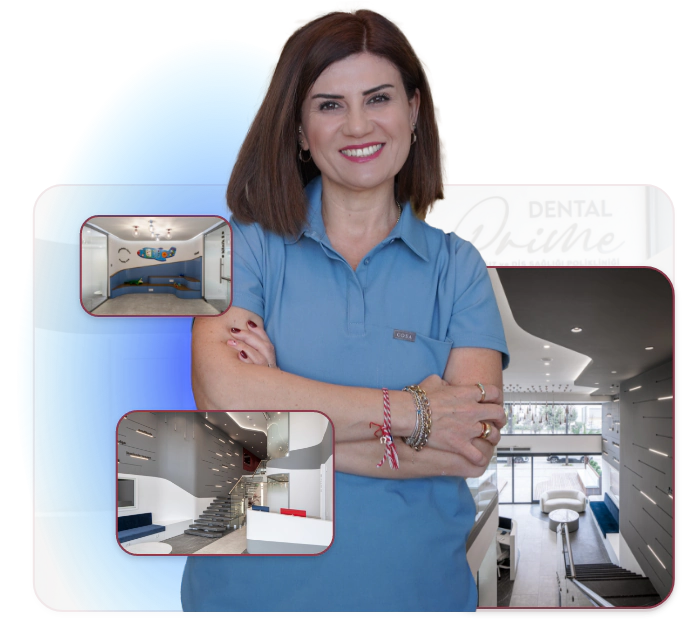
Pediatric Dentist Assoc. Prof. Dr. Sezin (Sezgin) Özer, who graduated from Samsun Bafra Anatolian High School and Hacettepe University Faculty of Dentistry, completed his PhD in Pedodontics at Ondokuz Mayıs University Faculty of Dentistry, Department of Pediatric Dentistry (Pedodontics). Between 2001 and 2018, he worked there as a research assistant, specialist, and faculty member. In April 2018, he left the university and started working in his own Pediatric Dental Clinic.